
Hearing the term insulin resistance can feel intimidating, especially if you’re experiencing low energy, stubborn weight gain, or other symptoms. The encouraging news? Your body is incredibly responsive to small, consistent changes, and learning about it is the first step toward feeling better.
Think of insulin resistance as a traffic jam inside your body. Insulin is like a traffic officer guiding sugar from your meals into your cells for energy. When your cells become resistant, their ‘doors’ don’t open properly. Sugar stays in your bloodstream instead of fuelling your body, leading to fatigue, increased hunger, abdominal weight gain, and eventually a higher risk of type 2 diabetes.
But here’s the good part: with the right tweaks to your daily routine, you can help clear that jam and restore balance. Let’s walk through what’s happening and what really helps.
What Is Insulin Resistance?
Think of your body like a bustling kitchen, where food is transformed into energy. Carbohydrates and sugars from what you eat prompt your body to release insulin, a hormone that acts as a key, unlocking your cells so sugar can enter and power your brain, muscles, and organs.
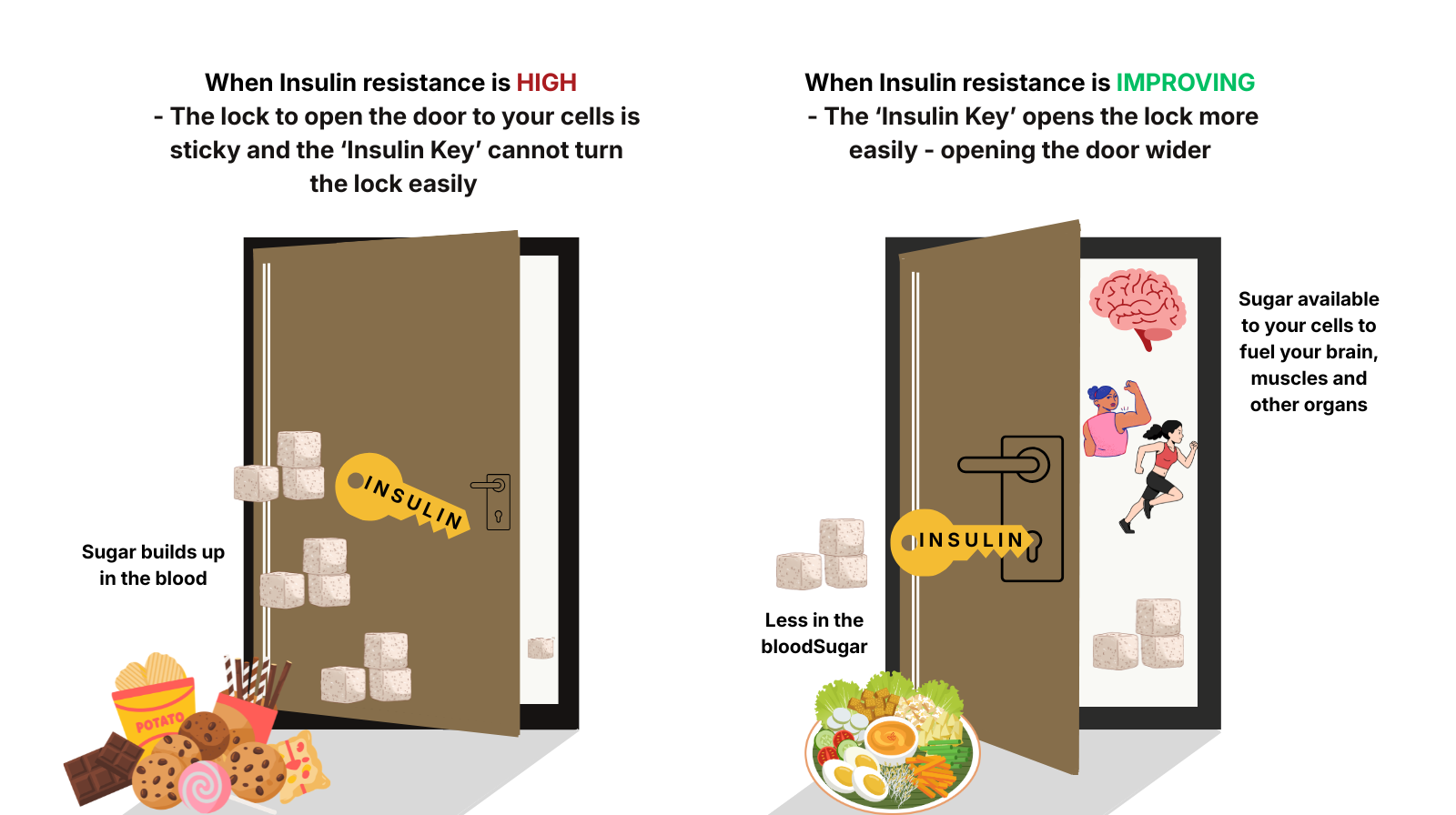
When Insulin Resistance Is High (The Jammed Door):
Sometimes, the lock on your cells gets sticky, making the insulin key less effective. The door to your cells only cracks open, allowing minimal sugar inside. This means sugar builds up in your blood, harming your arteries. As a result, you may feel tired (your cells aren’t energised), gain weight (extra sugar turns into fat), and experience cravings. Causes of this ‘jam’ often include excess weight, stress, lack of activity, or poor sleep - but it’s possible to change.
When Insulin Sensitivity Improves (Smooth Flow):
When you choose balanced meals and maintain healthy habits, the insulin key fits smoothly, cell doors swing open easily, and you enjoy steady energy, enhanced mood, and improved metabolism.
Insulin Resistance
What Makes Insulin Resistance Worse? (What to Limit)
These habits make those cell doors even ‘stickier’:
1. Processed & Sugary Foods
Sodas, pastries, white bread: they cause rapid blood‑sugar spikes and force your body to produce more insulin.
2. Fried or High‑Heat Foods
Fried meat, charred veggies, bacon: high‑heat cooking produces inflammatory compounds that block insulin’s effectiveness.
3. Large Late‑Night Meals
Your body handles sugar best earlier in the day. Heavy nighttime eating overloads your system.
4. Sedentary Days & Poor Sleep
Sitting too much and sleeping too little raise stress hormones that interfere with insulin.
5. Chronic Stress
Long‑term tension triggers cortisol, which directly battles insulin and makes resistance worse.
The goal isn’t perfection; it’s awareness and simple swaps.
Foods and Habits that Help Improve Insulin Resistance? (Your Allies)
The flip side is exciting: These options "polish" those cell door locks, making insulin work better and giving you sustained energy. Focus on whole, colourful foods and gentle routines - they nourish your body from the inside, supporting weight balance and reducing that jammed feeling.
Foods to Embrace: A Simple Daily Guide
Build meals around these to keep blood sugar steady. Aim for balanced plates: half veggies/fruits, a quarter protein, a quarter whole grains. Hydrate with 2-3 litters of water daily - it flushes things out and keeps cells responsive.
Fibre-Rich Veggies & Fruits
Leafy greens (spinach salad), berries (1 cup), broccoli (steamed side).
Fibre slows sugar absorption, preventing spikes, like a speed bump for smooth traffic. This eases insulin's job, reducing resistance and helping with steady energy and weight control.
Healthy Fats & Proteins
Avocado (half on toast), nuts/seeds (handful), fatty fish, like salmon (3-4 oz grilled gently).
These stabilise blood sugar and fight inflammation, making cells more welcoming to insulin. Think of them as oil for the door hinges, your body uses them to build better sensitivity.
Whole Grains & Low-GI Carbs
Oats (porridge breakfast), quinoa (side dish), sweet potatoes (baked).
They release energy slowly, avoiding overload. Why? This trains your body to respond better to insulin, cutting fatigue and supporting easier weight management.
Anti-Inflammatory Add-Ins
Cinnamon (sprinkle on yoghurt), green tea (2 cups daily), cranberries (fresh or unsweetened juice, 1 cup).
Natural compounds here calm inflammation and improve cell response, like a gentle cleaner for the lock. They help lower resistance, boosting mood and daily vitality.
Sample Day of Eating (Adapt to your culture e.g., add spices like turmeric for an Indian twist or olive oil for Mediterranean flair):
Breakfast (7-9 AM): Oatmeal with berries and a handful of almonds - starts your day with steady fuel.
Lunch (12-2 PM): Grilled salmon salad with greens, quinoa, and avocado dressing - keeps you full without spikes.
Snack (3-4 PM): Apple slices with cinnamon - quick, satisfying, and resistance-fighting.
Dinner (5-7 PM, lighter): Steamed broccoli, chicken stir-fry with sweet potato - ends the day balanced, giving time to digest.
Hydration Tip: Sip herbal tea or water between meals to stay refreshed and support cell health.
Lifestyle Framework: Building Resilience Step by Step
Tie these into your routine for lasting change; it's like upgrading your highway for smoother rides. Track how you feel weekly to see progress.
1.Movement (Your Daily Tune-Up):
30 minutes most days of gentle activity like walking, swimming, or yoga (moderate intensity, brisk but chatty pace).
Frequency: 5 days/week.
Why? It helps muscles soak up sugar without much insulin, clearing the jam and building sensitivity.
Start small, you'll feel more energised, aiding weight loss and better sleep.
Goal: Easier movement, less fatigue.
Monitor: Steps via phone app; aim for 7,000-10,000 daily.
2. Sleep Hygiene (Night-time Reset):
7-9 hours nightly in a cool, dark room; wind down with no screens 1 hour before bed.
Why? Quality rest lets your body repair and balance hormones, making cells more responsive; like a full overnight service for the traffic system.
Behaviour boost: Better sleep curbs cravings, helping you stick to healthy eats.
Outcome: Sharper focus, stable mood.
Track: Sleep diary for patterns.
3. Stress Resilience (Your Calm Anchor):
10 minutes daily of deep breathing (inhale 4 counts, exhale 6) or mindfulness (app-guided walks).
Why? Lowering stress cuts cortisol, which otherwise blocks insulin; think of it as removing roadblocks. This empowers calmer choices, like picking a salad over sweets.
Goal: Reduced worry, better habits.
Monitor: Weekly mood check (1-10 scale).
Mapping It All to Your Goals: Track and Celebrate
Your main wins? Steady energy, easier weight balance, and lower risks for bigger issues.
Start with one change, like adding a walk, and build from there, after 4-6 weeks, you might notice fewer cravings or more pep.
Monitor blood sugar at home if advised, or journal symptoms. If resistance is linked to weight or prediabetes, these steps can shift it positively, making you feel empowered and capable.
You've got this, small habits create big freedom.
What part would you like to try first?
Relevant references:
Rachfal, A. W., Grant, S., & Schwartz, S. (2021). The diabetes syndrome – a collection of conditions with common, interrelated pathophysiologic mechanisms. https://doi.org/10.2147/IJGM.S305156
Tönnies, T., Schlesinger, S., & al., A. L. E. (2023). Mediation analysis in medical research-part 31 of a series on evaluation of scientific publications.. https://doi.org/10.3238/arztebl.m2023.0175
Angelidi, A. M., Filippaios, A., & Mantzoros, C. (2021). Severe insulin resistance syndromes.. https://doi.org/10.1172/JCI142245
Kosmas, C. E., Bousvarou, M. D., & al., C. K. E. (2023). Insulin resistance and cardiovascular disease. https://doi.org/10.1177/03000605231164548
Martinez, S., Blanco, E., & al., R. B. E. (2019). Mechanisms linking childhood weight status to metabolic risk in adolescence. https://doi.org/10.1111/pedi.12972
Disclaimer
The information in this blog is for educational purposes only and is not a substitute for personalised medical or nutrition advice. Every person is different, and the right approach to nutrition depends on your individual health and circumstances.
I aim to share evidence-informed nutrition advice based on the best available research at the time of writing. As nutrition science continues to evolve, recommendations may change over time.
Functional testing and nutritional therapy are designed to complement, not replace, conventional medical care. If you have a medical condition, are taking prescription medication, are pregnant or breastfeeding, or have any concerns about your health, please speak with your GP or healthcare provider before making significant changes to your diet, supplements or lifestyle.
If you’re looking for personalised support, I’d be delighted to help you discover what works best for you.
