
You've eaten the "right" things. You've cut out the obvious culprits. You've Googled your symptoms more times than you'd like to admit.
And yet the bloating persists. The fatigue lingers. Your skin flares up at the worst moments, your brain feels like it's wading through treacle, and your digestion seems to have its own unpredictable agenda.
Sound familiar?
For many of my clients, this is exactly where they are when they first reach out. They've been managing symptoms for months, sometimes years, without anyone joining the dots. And when we start looking more closely at gut health, things often begin to make a lot more sense.
One term comes up again and again: leaky gut, or increased intestinal permeability.
It's not a trendy wellness buzzword. It's a real physiological process, and understanding it can be the turning point you've been waiting for.
So What Actually Is Leaky Gut?
Let's keep this simple, because it really doesn't need to be complicated.
Your gut lining is a clever, carefully designed barrier. It allows nutrients and beneficial compounds into your bloodstream while keeping out the things that don't belong there; toxins, undigested food particles, harmful bacteria. Think of it like a high-security gate: selective, protective, constantly working on your behalf.
When that lining becomes irritated or inflamed, tiny gaps can form. The gate develops holes. And suddenly, things that should stay in the gut start slipping through into the bloodstream.
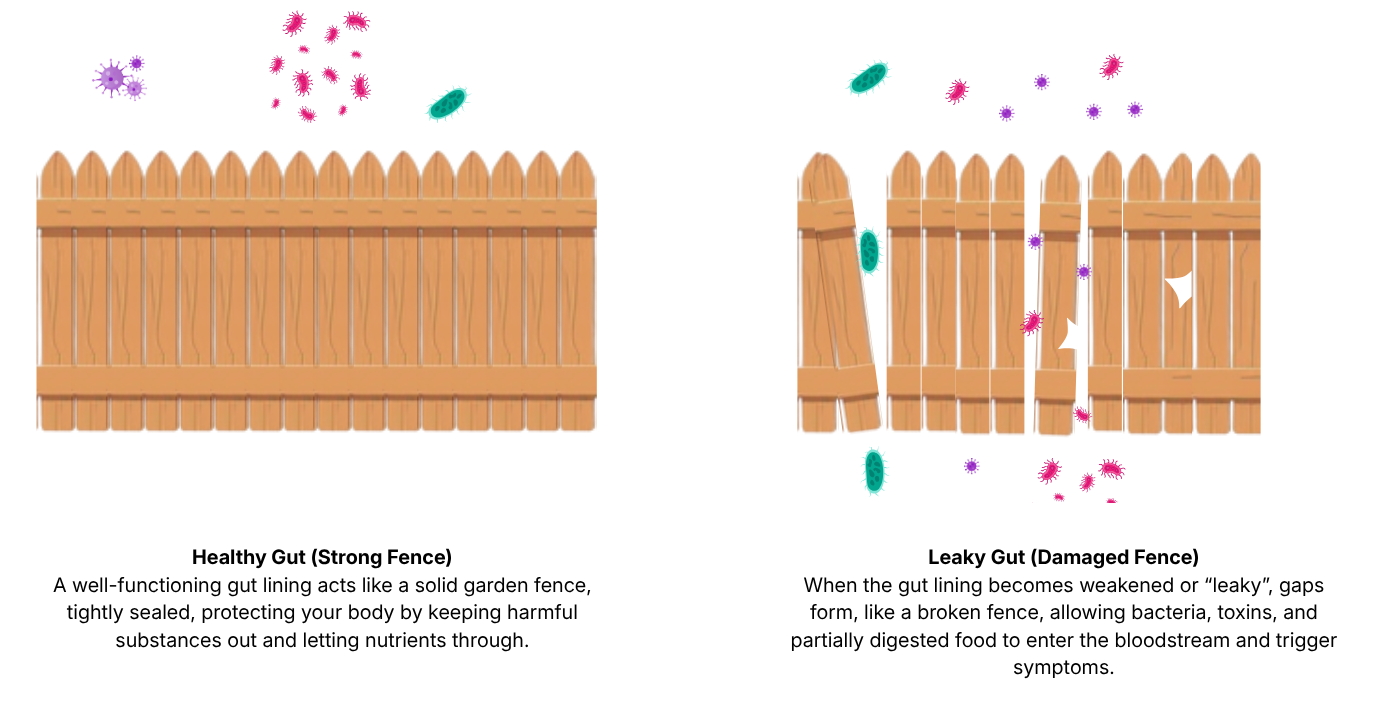
A healthy gut is like a strong and stable fence, keeping out the unwanted.
Your immune system, doing exactly what it's designed to do, raises the alarm. The result? Whole-body inflammation that can show up as:
Persistent bloating and digestive discomfort
Fatigue that sleep doesn't fix
Brain fog and difficulty concentrating
Low mood or heightened anxiety
Skin flare-ups like eczema or acne
Joint aches with no obvious cause
Growing food sensitivities
The frustrating thing is that these symptoms rarely get linked together by conventional medicine. Each one gets treated in isolation. But when you start to see them as a pattern, as your body speaking the same language, the path forward becomes much clearer.
What Does "Healing" Actually Look Like?
Here's the honest answer: it's not instant, and it's not dramatic. But it is real, and it is measurable.
Many of my clients start noticing meaningful shifts within a few weeks of changing their diet and lifestyle habits. The bloating starts to ease. The afternoon energy slumps become less severe. They sleep better. Their skin begins to calm down. And perhaps most meaningfully, they start feeling more comfortable in their own body again.
The difference between a damaged gut lining and a healing one isn't just academic. It shows up in how you feel every single day.
Foods That Make Leaky Gut Worse (And How to Gently Move Away From Them)
Before we talk about what to add in, it helps to understand what's working against you. The good news: you don't need a dramatic overhaul. Small, strategic swaps make a significant difference.
Processed and sugary foods feed harmful bacteria and drive inflammation. This is one of the most consistent patterns I see in clients who are struggling.
Refined carbohydrates and excess gluten can irritate an already-sensitive gut lining, particularly if your gut bacteria are already out of balance.
Fried foods and trans fats promote oxidative stress. Your gut cells genuinely don't thrive in that environment.
Alcohol and excessive caffeine weaken and dry out the gut barrier over time. A double blow if your mornings start with coffee and your evenings end with wine (no judgement, we work with real life here).
Irregular eating patterns and stress eating send confusing signals to your digestive system. Consistent mealtimes matter more than most people realise.
One thing I always tell new clients: we start with one change, not ten. Progress over perfection, every time.
Foods That Support Gut Healing
These are the ingredients I come back to again and again with clients, not because they're fashionable, but because the evidence behind them is genuinely solid.
Fermented foods: kefir, yoghurt, sauerkraut, kimchi (introduce beneficial bacteria that help rebalance your microbiome). If you're not eating any of these regularly, this is often the first place I suggest starting.
Bone broth and collagen-rich foods contain amino acids, particularly glutamine, that actively support repair of the gut lining. Not glamorous, but remarkably effective.
Fibre-rich vegetables and fruits: leafy greens, broccoli, berries, asparagus (feed your good bacteria and help stabilise blood sugar, which has a knock-on effect on inflammation).
Healthy fats and anti-inflammatory proteins: salmon, avocado, nuts, seeds (calm systemic inflammation and strengthen the cell membranes lining your gut).
Prebiotic foods: garlic, onions, bananas, oats (feed the beneficial bacteria you're working so hard to cultivate). Think of them as fertiliser for your microbiome.
A Simple Gut-Supportive Day of Eating
This isn't a rigid meal plan. It's a template, something to show you that eating for gut health can be genuinely enjoyable.
Breakfast: Kefir smoothie blended with berries, banana, and chia seeds (creamy, filling, and a brilliant start for your microbiome).
Lunch: Salmon salad with avocado, a spoonful of sauerkraut on the side, and whatever greens you enjoy most.
Snack: An apple with a handful of mixed nuts (simple, satisfying, blood sugar-friendly).
Dinner: A bone broth-based soup with quinoa, broccoli, and garlic. Warming, nourishing, and deeply anti-inflammatory.
Evening: Chamomile or peppermint tea. Your gut does some of its best repair work while you sleep, give it the calmest possible environment to do so.
The Part Most People Miss: Lifestyle Matters Too
Diet is the foundation, but it doesn't work in isolation. Some of the biggest gut-healing wins I see in clients come from changes that have nothing to do with food.
Sleep is non-negotiable. Your gut lining undergoes its most active repair during deep sleep. Consistently getting less than 7 hours is like building a sandcastle at low tide, you're undoing your own progress. A calming bedtime routine and limiting screens before bed aren't just nice ideas; they're part of your healing protocol.
Chronic stress is one of the most underestimated drivers of gut dysfunction. The gut-brain axis is a two-way communication highway, and when you're running on adrenaline, your digestive system pays the price. Even ten minutes of deep breathing, a short walk, or a brief meditation practice can make a measurable difference.
Gentle movement: walking, yoga, light cycling - supports digestion, reduces cortisol, and keeps things moving (in every sense). You don't need to be training for a marathon. Consistency beats intensity here.
How Progress Actually Shows Up
When clients are working on their gut health, we track progress across a range of markers, not just what the scales say or whether they're still bloating. The picture is much richer than that.
Week by week, we look at energy levels, mood stability, sleep quality, skin clarity, food cravings, and digestive regularity. Most clients are surprised by how quickly some of these start to shift, and how connected they all are.
The body wants to heal. It really does. When you remove the things that are working against it and give it what it needs, the response is often faster and more pronounced than people expect.
Ready to Work on This Together?
If you've recognised yourself in this post, know that you don't have to keep piecing it together alone.
I work with clients to get to the root of what's driving their symptoms, identify their personal triggers, and build a practical, enjoyable eating and lifestyle plan that supports lasting gut health, not just a temporary patch.
If that sounds like what you need, I'd love to have a conversation.
Written by Navita Doshi, registered nutritional therapist and founder of Navita Doshi Nutrition. Navita helps clients get to the root cause of unexplained symptoms the NHS couldn’t solve or even tried to solve.
Disclaimer
The information in this blog is for educational purposes only and is not a substitute for personalised medical or nutrition advice. Every person is different, and the right approach to nutrition depends on your individual health and circumstances.
I aim to share evidence-informed nutrition advice based on the best available research at the time of writing. As nutrition science continues to evolve, recommendations may change over time.
Functional testing and nutritional therapy are designed to complement, not replace, conventional medical care. If you have a medical condition, are taking prescription medication, are pregnant or breastfeeding, or have any concerns about your health, please speak with your GP or healthcare provider before making significant changes to your diet, supplements or lifestyle.
If you’re looking for personalised support, I’d be delighted to help you discover what works best for you.
