


NutrEval FMV :
Identifying nutritional deficiencies and insufficiencies
Why do I need nutrient testing ?
NutrEval: when "eat a balanced diet" isn't a good enough answer
Most people who come to me with persistent fatigue, brain fog or unexplained symptoms have already been told to eat well, sleep more, and reduce stress.
They're usually doing all three. What they often haven't been told is whether their cells are actually getting what they need to produce energy, or whether something in the way their body processes nutrients is getting in the way.
The NutrEval FMV (Full Metabolic View) looks at exactly that: not just whether nutrients are present, but whether they're working.
Who can NutrEval testing help support ?
Persistent fatigue that doesn't respond to rest
Slow recovery from illness or stress
Restrictive diets or limited food variety
Mood changes linked to energy levels
Wanting to understand the metabolic picture behind symptoms
Brain fog or poor concentration
Suspected nutrient deficiencies not picked up on standard bloods
High stress or burnout
If digestive symptoms are also part of the picture, the microbiome and digestive enzyme scores on this test provide a useful first indication of gut involvement, and may point toward the GI Effects functional test as a more detailed next step for that specific area.

What makes the NutrEval different from a standard nutrient blood test
Feeling tired?
A standard blood test might check:
iron,
B12,
folate
and vitamin D (If you’re lucky)
Feeling tired?
The NutrEval tests:
Over 125 markers across five functional domains
How efficiently your mitochondria are producing energy,
whether your cells are under oxidative stress,
the balance of your fatty acids,
how your methylation pathways are working,
markers of toxic load.
It combines urine and blood samples to give a metabolic picture rather than just a snapshot of circulating levels.
The 5 areas the NutrEval test looks at
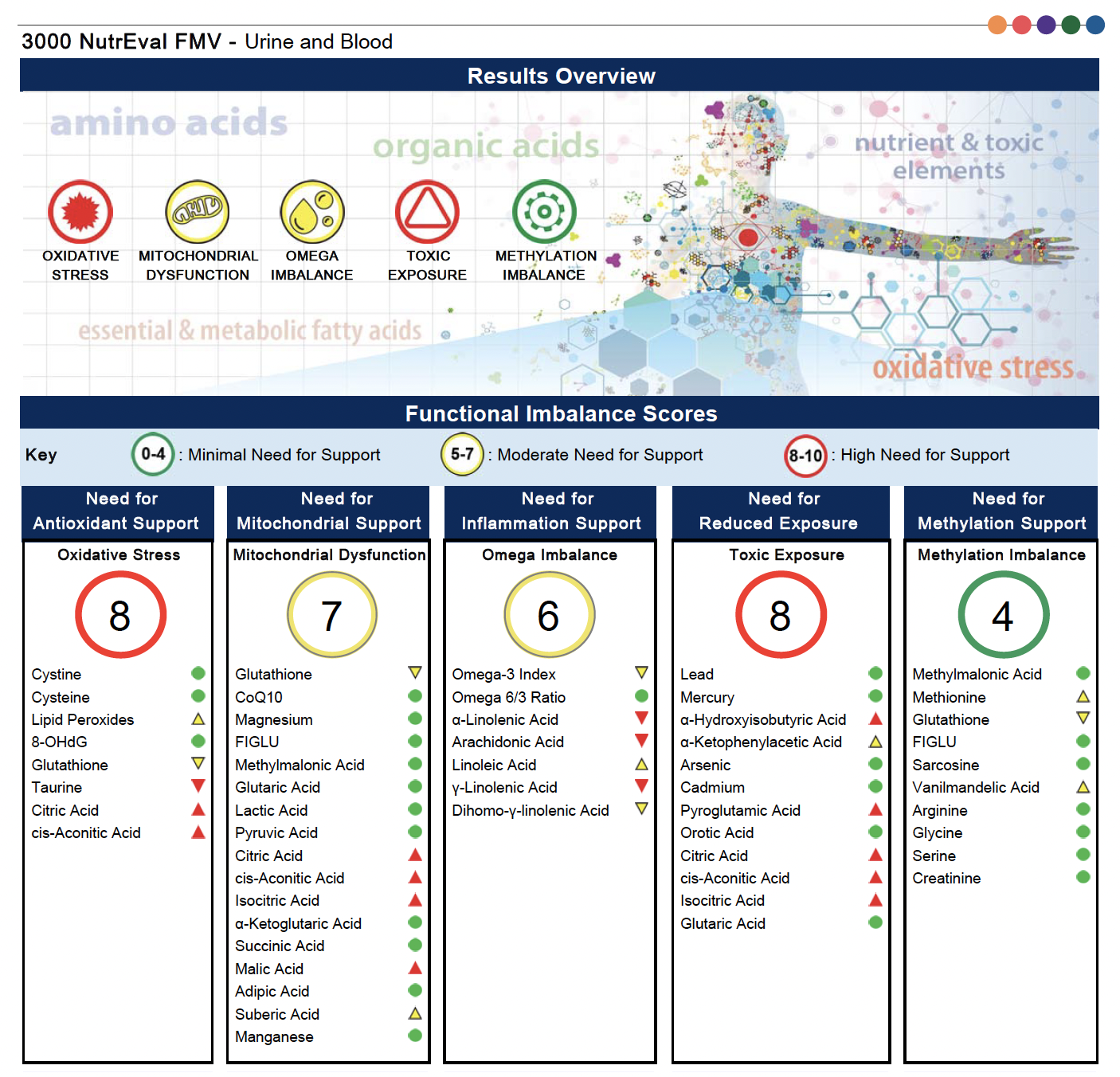
Like the GI Effects, the NutrEval opens with five functional imbalance scores - Each rated from 0 to 10
They show where the body's metabolic picture is most out of balance and where support is most needed.


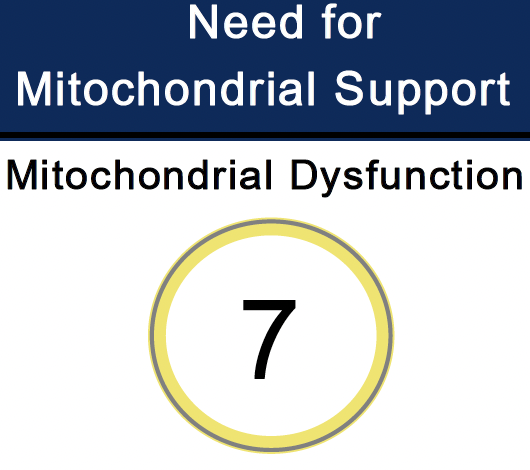


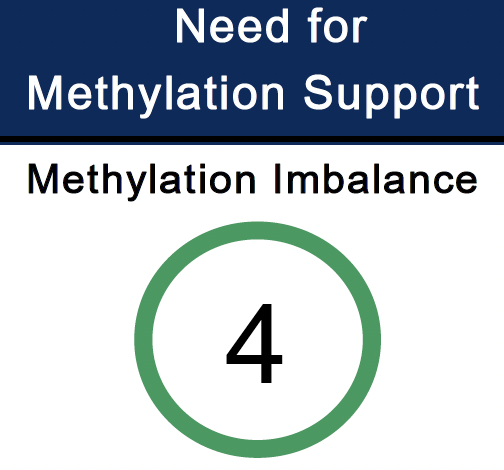
This is the kind of profile where someone might feel chronically exhausted, struggle to recover from stress or illness, and find that standard approaches to fatigue (sleep, iron supplements, more vegetables) haven't moved the needle.
The scores immediately show where to focus first.
Oxidative Stress
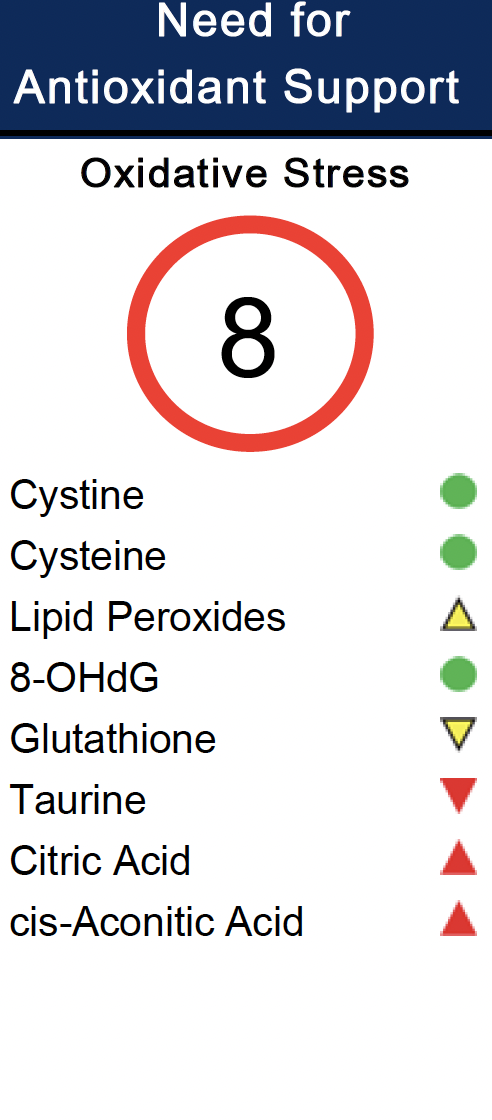
Oxidative stress is what happens when the body produces more free radicals than it can neutralise. Small amounts are normal and even useful, but when the balance tips chronically, it accelerates cellular ageing, drives inflammation, and impairs the very energy-production systems that help us cope with it.
In this profile, glutathione, the body's most important antioxidant, is right at the lower edge of range, lipid peroxides (a marker of oxidative damage to cell membranes) are near the top of their range, and multiple antioxidant nutrients show a meaningful functional need.
This isn't just about taking more vitamin C. The pattern points toward a body under significant oxidative load, and understanding what's driving that load (toxic exposure, mitochondrial inefficiency, diet quality, chronic inflammation) is as important as addressing the deficiencies directly.
This suggests: a plan that addresses both the antioxidant deficit and its likely drivers, with food as the foundation and targeted nutritional support layered in where needed. The picture here connects directly to the high toxic exposure and mitochondrial scores below.
Mitochondrial Dysfunction
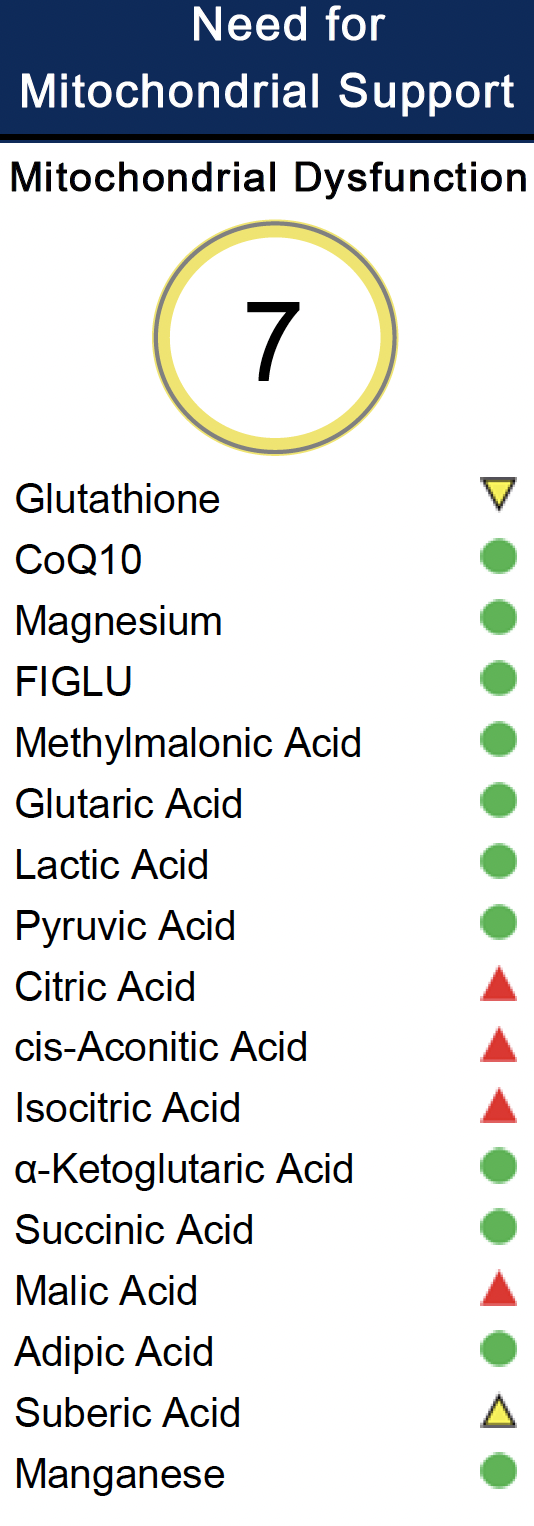
Your mitochondria are the energy factories inside your cells. They take the food you eat and convert it into the fuel your body actually runs on.
The Krebs cycle is the central process within that system. When organic acid markers from multiple steps in the Krebs cycle are simultaneously elevated (as they are here) it suggests the cycle is working hard but not converting efficiently, like a car engine that's running high but not producing adequate power.
Several nutrients act as cofactors at critical steps in this process.
In this profile, magnesium is at a high need score of 9, and B6 scores 7 (both are essential for efficient energy production and both are commonly depleted by stress, poor diet and certain medications.
This isn't about tiredness that sleep will fix; it's about a cellular energy system that needs specific nutritional support to work properly.
This suggests: targeted support for the specific steps in the energy production process that are flagging, informed by which cofactors are most depleted. The mitochondrial picture here is also directly worsened by the oxidative stress score. These two domains are pulling in the same direction.
Omega Fatty Acid Imbalance
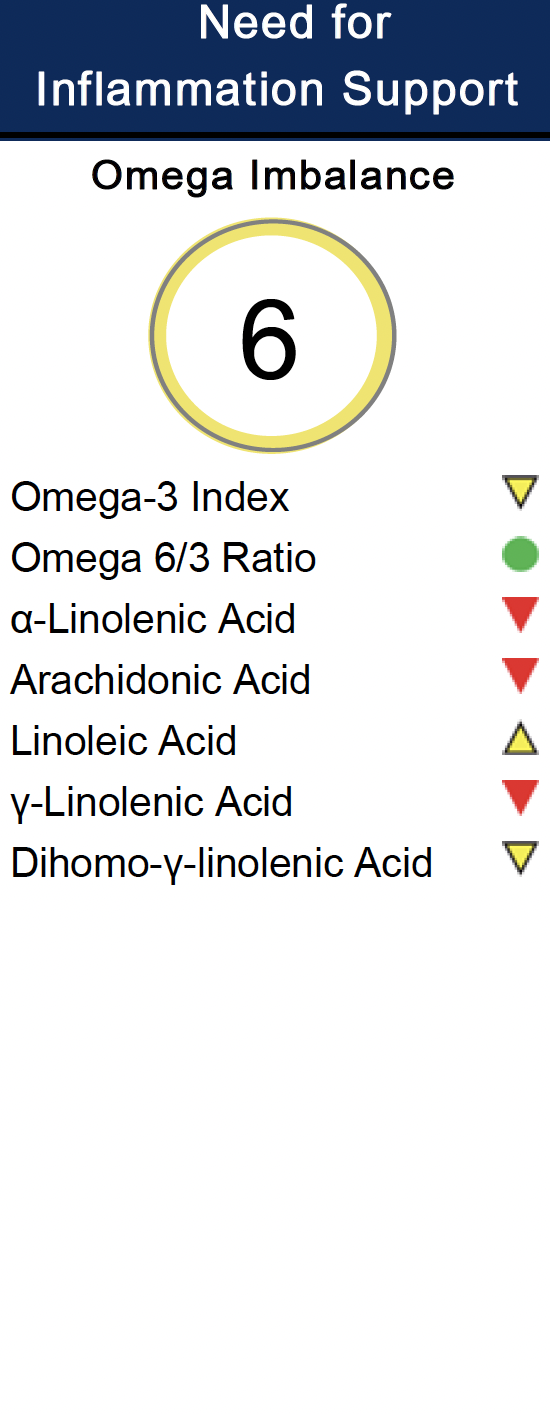
Omega-3 and omega-6 fatty acids need to be in balance.
Omega-6s are naturally pro-inflammatory (useful in short bursts for fighting infection and healing)
Omega-3s are anti-inflammatory and protective.
The modern diet typically delivers far too much omega-6 and too little omega-3, and this report shows exactly that: the ratio is skewed, ALA (the plant-based omega-3 precursor) is below range, and DGLA (an anti-inflammatory omega-6 that only forms when the conversion pathways are working well) is also low.
The NutrEval goes further than a simple omega-3 blood level by looking at the conversion pathway. It is able to show not just how much omega-3 someone is consuming, but how well their body is converting it into the active forms that do the anti-inflammatory work.
This matters because some people convert omega-3 poorly regardless of intake.
This suggests: a look at both dietary sources and conversion efficiency, whether the priority is more pre-formed omega-3 from oily fish and algae, or whether conversion support (which requires specific B vitamins and minerals) is also needed.
Not a generic "take fish oil" recommendation.
Toxic Exposure
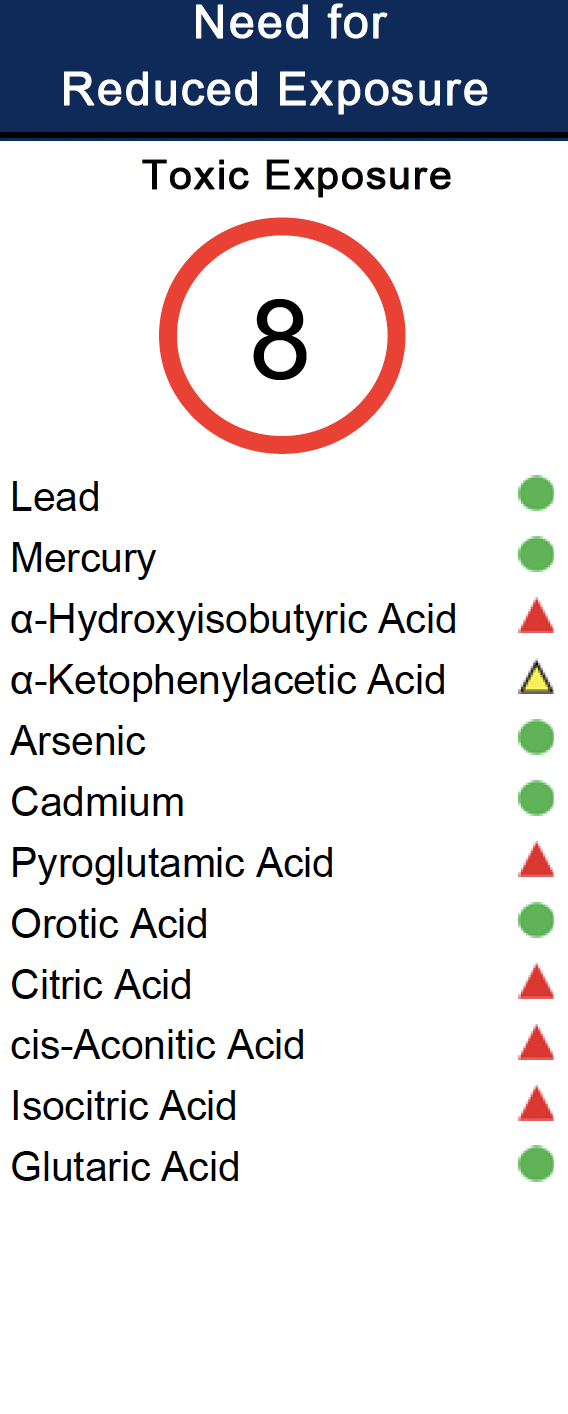
This is one of the sections that surprises people most.
Heavy metals (lead and mercury) are within range here, which is reassuring.
But the high toxic exposure score is coming from something different:
organic chemical markers associated with everyday environmental exposures, including MTBE (a petrol additive found in groundwater and vehicle exhaust)
styrene (found in plastics, food packaging and synthetic materials).
The elevated pyroglutamic acid is clinically significant: it's a marker that rises when the body's glutathione supply is under strain from detoxification demands.
This connects directly back to the oxidative stress domain.
The body is working hard to process a chemical load, which is depleting the very antioxidant resources it needs to manage that stress. The result is a self-reinforcing cycle.
This suggests: a look at realistic sources of daily exposure and practical ways to reduce them, alongside specific nutritional support for the detoxification pathways that are under pressure.
This isn't about dramatic detox protocols, it's about reducing the ongoing load and supporting the systems that are already working overtime.
Methylation Imbalance
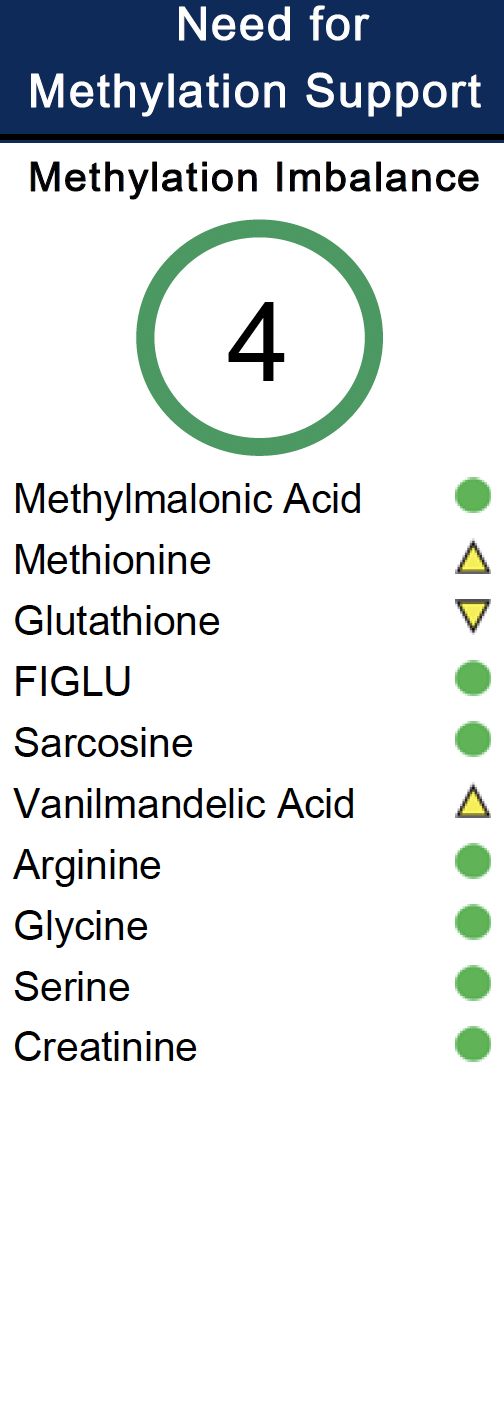
Methylation is a chemical process that happens billions of times a second in your body.
It's involved in:
switching genes on and off,
clearing hormones like oestrogen,
producing neurotransmitters,
repairing DNA,
and a host of other essential functions.
In this profile, the score of 4 suggests methylation is broadly functioning but worth keeping an eye on.
The key methylation markers:
methylmalonic acid (a functional marker of B12 sufficiency),
FIGLU (a folate marker) and
homocysteine are all within range.
This is a positive picture within what is otherwise a demanding metabolic profile.
It's also worth noting that methylation capacity can be compromised over time if the oxidative stress and toxic load remain high.
These systems don't operate independently.
This suggests: no urgent methylation intervention based on these results, but maintaining good B vitamin and methionine status as a foundation and monitoring if the broader metabolic picture doesn't improve.
The nutrient need overview - from the report
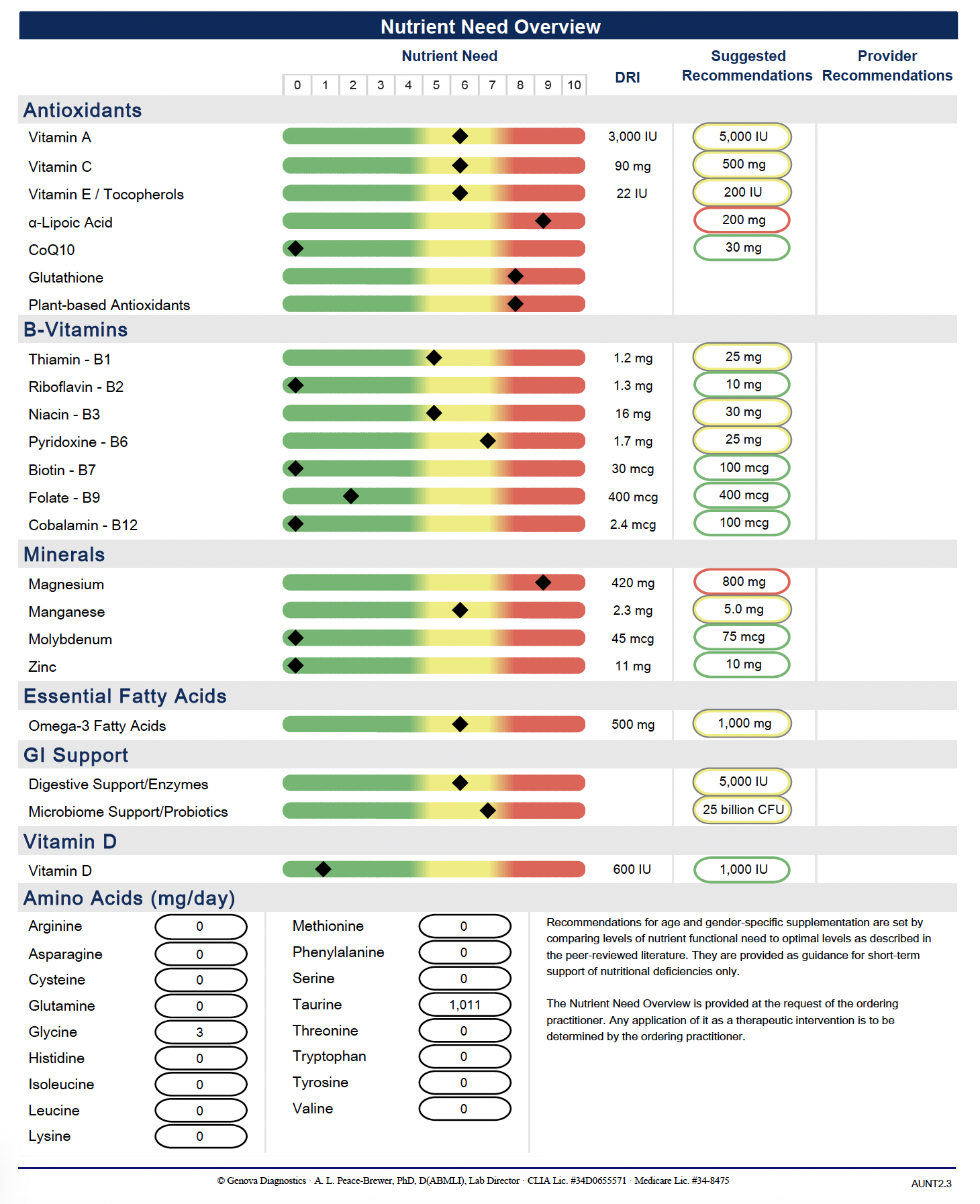
As well as the five domain scores, the NutrEval produces a Nutrient Need Overview.
A visual summary of functional need across every major nutrient category.
What's immediately visible here is the specificity:
CoQ10 scores 0,
B12 scores 0, zinc scores 0
these are not areas that need attention in this person.
Magnesium and α-lipoic acid, by contrast, score 9 each.
A generic supplement recommendation would often include a broad-spectrum multivitamin covering all of these.
This data shows why that approach wastes money and misses the point, the need is highly specific, and the plan should reflect that.
This sample NutrEval Test shows a body under sustained metabolic pressure from:
oxidative stress & toxic exposure - depleting antioxidants and burdening detoxification,
mitochondrial inefficiency - making it harder to produce the energy needed to cope.
These aren't random problems; they're connected, and they need to be addressed in the right order and with the right tools.
A scientist's perspective
The NutrEval is the most data-dense test I work with, and it's the one where my research background is most directly useful. In my years as a research scientist, I spent a lot of time working with multi-variable datasets where the relationship between markers matters as much as any individual result. The NutrEval requires exactly that kind of thinking.
A high oxidative stress score means something different depending on what's driving it: toxic exposure, mitochondrial dysfunction, infection or simply a very restricted diet.
The Nutrient Need Overview is one of the most practically useful pages in functional medicine, it converts a complex dataset into a prioritised, actionable list.
I rarely use it to prescribe supplements; I use it to understand the metabolic landscape and choose the most targeted interventions.
Used well, this test means that recommendations are grounded in evidence specific to that person, not generic nutritional advice.
The NutrEval works best as part of a programme rather than as a standalone test. It generates a significant amount of information, and the value lies in using that information to shape a personalised plan, not in acting on every result simultaneously.
Further reading: more on how I think about functional testing and when it adds real value on the blog. Read the post →
Think your symptoms might have a metabolic root?
The NutrEval is usually recommended partway through a programme, once we have a clear picture of your symptoms and what a standard approach has or hasn't achieved. A free 30-minute discovery call is the best place to start.